
Payday vs Installment Loan for Car Repair: How to Choose
Match the repair bill to the right loan: payday for small gaps, installment for bigger jobs. Learn how to choose payday vs installment loan for a car repair.
Your transmission just failed, the mechanic is quoting $2,400, and your next paycheck is eight days away. In that moment, the loan you choose matters as much as the repair itself. A payday loan and an installment loan can both put cash in your account quickly, but they work very differently when the bill is $400 versus $4,000. Choosing the wrong structure can turn a manageable repair into a months-long debt cycle.
This guide walks you through how to choose payday vs installment loan for a car repair by matching the loan amount to the size of the bill, aligning repayment timing with your pay cycle, and comparing the real cost of each option. You will also see when a larger personal loan makes more sense than either short-term product, and why confirming that the shop accepts your payment method should happen before you sign anything.
Start With the Repair Estimate, Not the Loan Menu
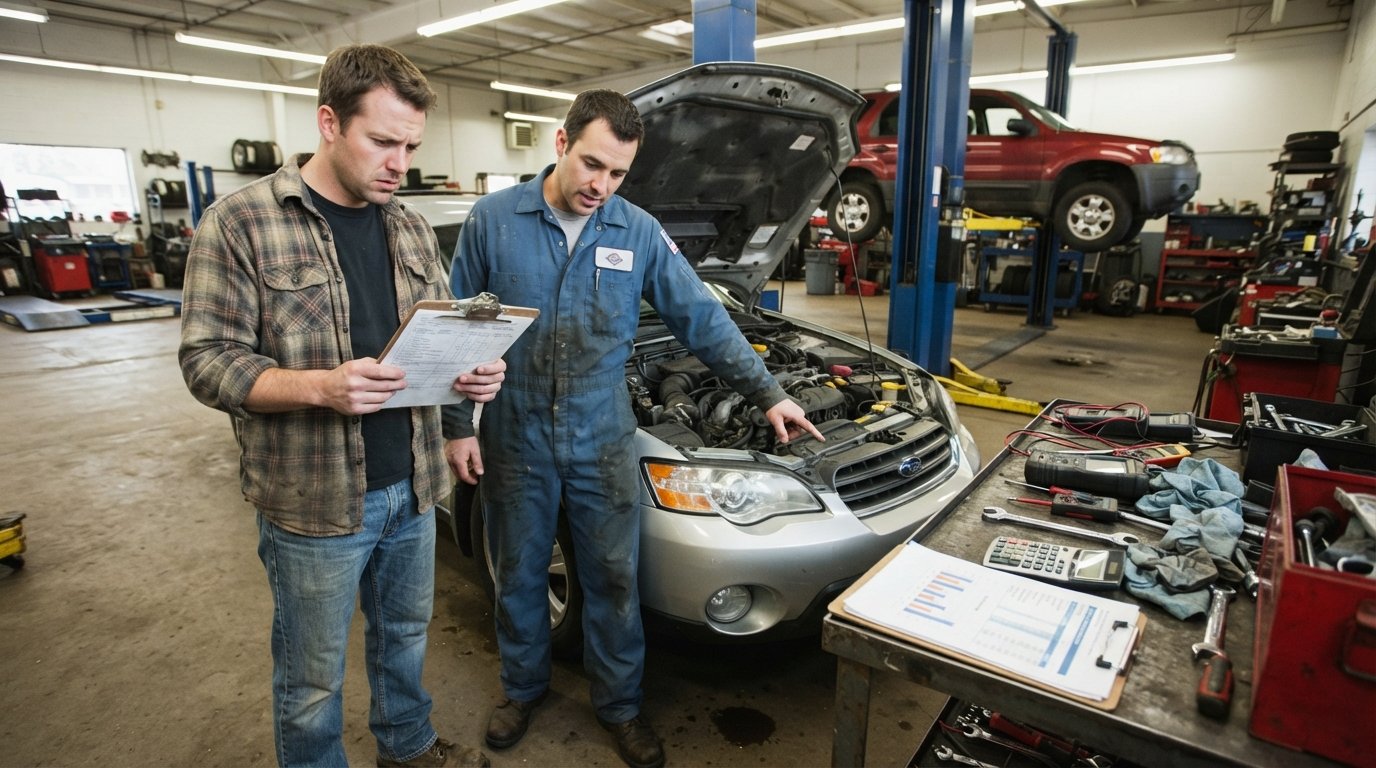
The most common mistake borrowers make is shopping for a loan before they know the exact repair cost. Ask the shop for a written estimate that separates parts and labor, then set aside a small buffer for surprises. A $650 brake job can become an $850 brake job once the rotors are measured. Knowing whether you are facing a few hundred dollars or a few thousand changes which loan structure fits.
Once you have the estimate, compare it against your available cash. If you have $200 in checking and the bill is $700, your funding gap is $500. That single number, not the total bill, is what you actually need to borrow. Lenders evaluate your request against your income, so a smaller gap is easier to qualify for and cheaper to repay.
It also helps to ask the shop two practical questions up front: whether they require full payment at pickup, and whether they accept the payment method your lender will use. Some independent shops accept debit cards and cash but not prepaid cards, and a few still prefer cash for larger jobs. Confirming this before funds arrive prevents an awkward delay when your car is ready.
Payday Loans: Built for Small Gaps and Short Timelines
A payday loan is a small, short-term advance, usually under $1,000, that you repay from your next paycheck. Through a connecting service like AdvanceCash, borrowers submit one online request and may receive offers from third-party lenders, with funds potentially available as soon as the next business day. The appeal for a car repair is speed and simplicity: no collateral, minimal paperwork, and a repayment date that lines up with your payday.
The tradeoff is cost. Payday loans carry very high annual percentage rates because the fee is charged over a very short term. A $15 to $30 fee per $100 borrowed sounds small until you annualize it. On a $400 repair gap, a $60 to $120 fee due in two weeks is a significant slice of the total. That math is tolerable when the alternative is missing work because your car will not start, but it becomes painful if you need to roll the loan over.
Payday loans fit best when the funding gap is small (typically under $500), the repair is essential and urgent, and you are confident your next paycheck covers both the loan and your normal bills. They fit poorly when the repair bill is large, when your income is irregular, or when you already know you will need more than one pay cycle to repay.
Installment Loans: Spread the Cost of Bigger Repairs
An installment loan gives you a set amount, usually under $5,000 for the short-term products offered through CashLoanFunded's lender network, and you repay it in scheduled payments over a defined term. Instead of one balloon payment due on your next payday, you make fixed payments over several weeks or months. That structure matches the reality of a $2,000 engine repair far better than a single paycheck-sized repayment.
Installment loans typically carry lower APRs than payday loans, though rates still vary widely based on your credit profile and the lender. The total cost can end up higher than a payday loan if you stretch a small balance over a long term, so the key is matching the term to the amount. A $1,200 repair repaid over three months usually costs less in total than the same amount rolled over repeatedly on a payday loan.
The main drawback is timing. Approval and funding can take longer than a payday advance, though many online lenders still fund as soon as the next business day. You also commit to a longer repayment schedule, which means the loan stays on your budget for weeks or months. If your income is stable, that predictability is an advantage. If it is not, a fixed payment can become a burden.
Match the Repayment Schedule to Your Pay Cycle
The single best predictor of whether a short-term loan helps or hurts you is whether the repayment date lines up with your income. Before you accept any offer, map out your next two paychecks and your fixed expenses: rent, utilities, insurance, fuel, and groceries. Whatever remains is your true repayment capacity.
Use this quick framework to decide:
- If the repair gap is under $500 and your next paycheck comfortably covers the loan plus your bills, a payday loan can close the gap with one clean repayment.
- If the gap is $500 to $2,000 and one paycheck cannot absorb it, an installment loan with payments spread over two to six pay periods is usually the safer fit.
- If the gap exceeds $2,000 or the repair estimate is likely to grow, consider a larger personal loan with a longer term instead of stacking multiple short-term products.
Notice that the decision is driven by cash flow, not by which loan sounds cheaper on paper. A low-APR installment loan with a payment due the day before rent is worse for you than a slightly pricier payday loan timed to your payday. Lenders set due dates, but you choose which offer to accept, so read the schedule before signing.
Compare APR and Total Cost on Small Bills
When the bill is only a few hundred dollars, the sticker price of the loan can look trivial. That is exactly when borrowers underestimate the cost. The right comparison is total dollars repaid, not the fee alone.
Run a simple side-by-side: for a $400 repair gap, a payday loan might cost $60 to $120 in fees due in two weeks. An installment loan of the same amount over three months might cost $50 to $90 in finance charges but requires three payments and a longer application. For that small amount, the payday loan is often cheaper in total dollars even though its APR is higher, because the term is so short.
Flip the scenario to a $1,800 repair. A payday loan cannot responsibly cover that amount, and rolling a $1,800 advance across multiple pay periods multiplies fees fast. An installment loan repaid over four to six months spreads the cost and keeps each payment manageable. This is the crossover point where the installment structure wins on both affordability and total cost. For a deeper look at how secured and unsecured installment structures work for major household expenses, the guide on installment loans for home repairs without equity explains the same repayment logic applied to property expenses.
When a Larger Personal Loan Beats Both Options
Some repairs are not really short-term events. A rebuilt transmission, a full engine replacement, or a hybrid battery failure can run $3,000 to $6,000, and the shop may need a deposit before ordering parts. In those cases, neither a payday loan nor a small installment loan fits cleanly.
A personal loan, typically $1,000 to $15,000 through online request forms, offers a longer term and a fixed interest rate, which lowers the monthly payment and gives you room to absorb the repair without draining every paycheck. The application process is similar, but approval may take a bit longer and rates depend more heavily on credit history. If your credit is imperfect, you can still be considered, provided you meet income criteria and can show a stable source of funds.
Consider a personal loan when the repair exceeds roughly $2,500, when the shop requires a deposit before ordering parts, or when you expect related repairs in the next few months (for example, a timing belt job alongside a water pump). Bundling those costs into one loan with one payment is simpler and often cheaper than taking three separate short-term advances.
Check Eligibility and Protect Your Credit
Before you apply anywhere, confirm the basics: you are at least 18, have valid identification, a steady source of income, and a bank account in good standing. Through a connecting service, you submit one request and lenders review it, so multiple offers do not necessarily mean multiple hard credit pulls, but you should still read each lender's terms on credit checks.
Applying for a loan can affect your credit score, and missing or late payments can damage it further. Set a reminder for each due date, and if a payment will be tight, contact the lender before it is late rather than after. Late payments typically trigger fees and higher rates, which is the opposite of what you need during a car repair.
Also remember that short-term loans are designed for temporary financial gaps, not as a long-term solution. If you find yourself considering a second loan to repay the first, that is a signal to stop and reconsider the plan, possibly by negotiating a payment arrangement with the repair shop or asking about financing the shop itself offers.
A Practical Decision Checklist
Here is how to choose payday vs installment loan for a car repair in five steps:
- Get a written repair estimate and calculate your actual funding gap, not the full bill.
- Confirm the shop's accepted payment methods and when payment is due.
- Map your next two paychecks against fixed expenses to find your real repayment capacity.
- Match the loan type to the gap: payday for small, one-paycheck gaps; installment for larger gaps spread over multiple pay periods; personal loan for repairs above roughly $2,500.
- Compare total dollars repaid, read the repayment schedule, and confirm you can meet every due date before accepting an offer.
Following that sequence keeps the decision grounded in your actual cash flow rather than in a lender's marketing. It also keeps you from borrowing more than the repair requires, which is the most common way a short-term loan turns into a long-term problem.
Car repairs rarely arrive at convenient times, but the right loan structure can keep a bad week from becoming a bad year. Start with the estimate, match the repayment schedule to your pay cycle, compare total cost rather than headline rates, and confirm the shop accepts your payment before funds arrive. Do that, and you will choose the loan that fixes the car without breaking the budget.