
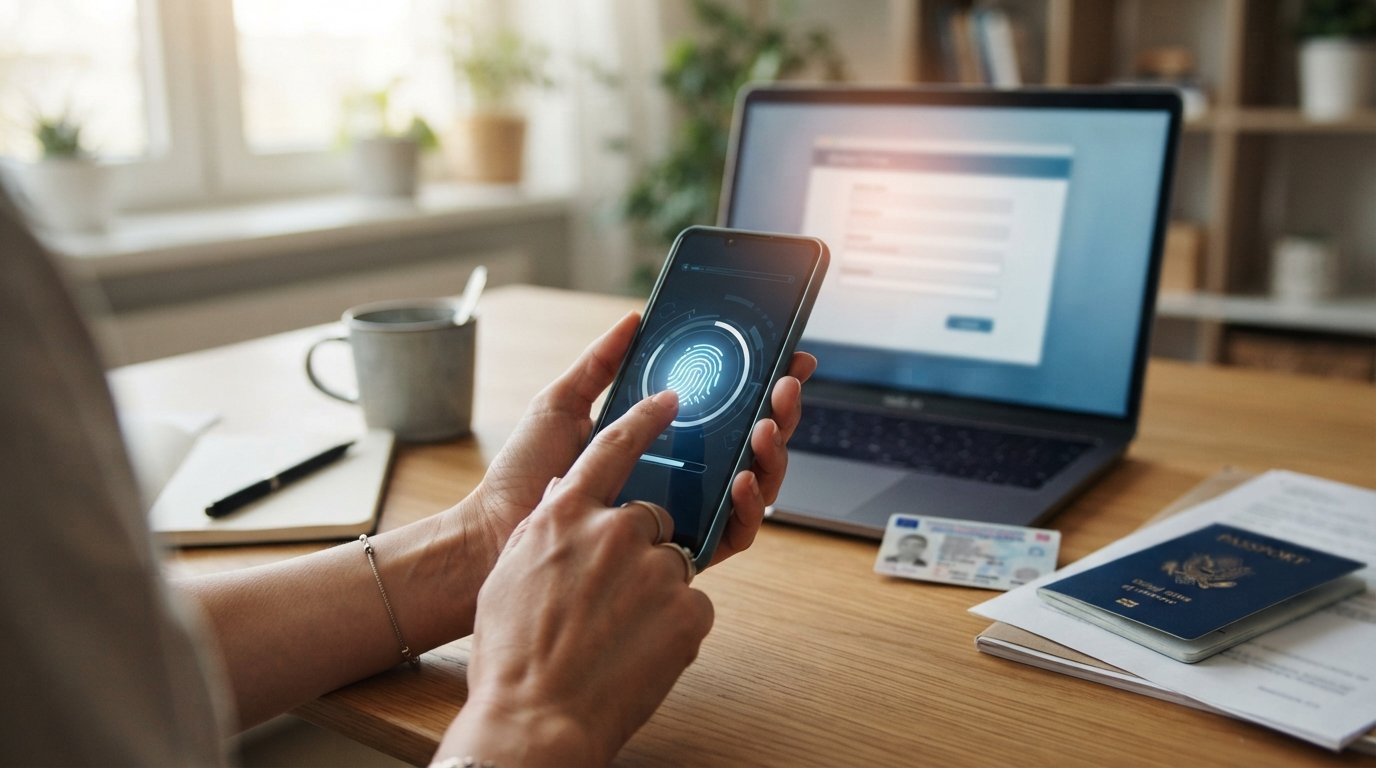
How Online Lenders Verify Identity During Loan Applications
Identity checks confirm you are who you claim before funds are released. See what lenders verify, which documents to protect, and how to confirm licensing.
You need cash quickly, and an online loan application promises speed and convenience. But before you type your Social Security number into a website, a reasonable question surfaces: how do online lenders actually verify who you are? The answer matters because identity verification protects you from fraud, ensures lenders comply with federal law, and determines how smoothly your application moves from submission to funding. Understanding these checks helps you share sensitive information with confidence and spot red flags that signal an unsafe lender.
Identity verification in online lending is not a single step but a layered process. Lenders combine database checks, document review, and sometimes biometric analysis to confirm that the person applying is who they claim to be. For borrowers with urgent needs, including those exploring options through services like FundingCashLoans, knowing what to expect removes uncertainty and helps the process go faster. This guide breaks down what those checks confirm, which documents you should never send through unsecured channels, and how to confirm a lender is licensed before you share a single detail.
What Identity Verification Checks Actually Confirm
At its core, identity verification answers three questions: Are you the person you say you are, do you exist in official records, and are you authorized to borrow? Lenders are legally required under the Bank Secrecy Act and the USA PATRIOT Act to verify customer identity before opening financial accounts or extending credit. For online lenders, this means running your information through a series of checks that cross-reference multiple data sources.
The first layer typically involves matching the personal details you provide against public and private databases. Your name, address, date of birth, and Social Security number are compared against credit bureau records, utility records, and government databases. If the information aligns, the lender gains confidence that you are a real person with a traceable history. If discrepancies appear, such as a recent address change or a name variation, the system may flag the application for additional review.
The second layer confirms that you control the financial accounts you list. Lenders may use micro-deposits (small amounts deposited into your bank account that you must verify) or instant account verification services that connect directly to your bank. This step proves you have access to the account where funds will be sent and where repayments will be withdrawn. It also helps prevent fraudsters from directing loan proceeds to accounts they do not own.
The third layer assesses whether you are authorized to enter into a loan agreement. This includes checking your age (you must be at least 18 in most states), confirming you are not on any government watchlists, and verifying that your identity has not been flagged for fraud or identity theft. Some lenders also check whether your Social Security number has been used in recent suspicious applications, which can indicate identity theft.
What these checks do not confirm is your creditworthiness. Identity verification and credit evaluation are separate processes. A lender can verify your identity perfectly and still deny your loan based on your credit history or income. Understanding this distinction helps you prepare the right information for each stage of the application.
Why a Secure Connection and Verified Site Matter
When you submit a loan application online, you are transmitting some of the most sensitive data in your life: your Social Security number, bank account details, income information, and home address. If that data travels over an unsecured connection, it can be intercepted by criminals. This is why reputable online lenders use 256-bit SSL encryption, the same standard used by major banks and government agencies. You can confirm a site is encrypted by looking for the padlock icon in your browser and ensuring the URL begins with https:// rather than http://.
But encryption alone is not enough. You also need to confirm that the site itself is legitimate and not an impostor designed to steal your information. Phishing sites often mimic real lenders, using similar logos and URLs to trick applicants into submitting personal data. Before entering any information, check the site's domain name carefully, look for a physical address and phone number, and search for independent reviews or complaints. A legitimate lender will have a verifiable presence and a clear privacy policy explaining how your data is used and protected.
Another critical security signal is how the lender communicates with you. Reputable lenders do not ask for sensitive information via email or text message. They direct you to a secure portal for document uploads and account verification. If you receive an unsolicited message asking you to confirm your Social Security number or bank login credentials by reply, treat it as a scam. Similarly, be cautious of any lender that pressures you to act immediately or threatens consequences for not providing information on the spot.
For borrowers using a connection service, the security question extends to the service itself. Platforms that connect applicants with third-party lenders should clearly disclose their role and never ask for payment upfront. They should also provide a privacy policy and terms of use that explain exactly what happens to your data. If a connection service cannot answer basic questions about its data handling, that is a warning sign.
Documents to Avoid Sending Through Unsecured Channels
Identity verification often requires documents, but not every document should be shared freely. Some documents carry more risk than others if they fall into the wrong hands. Knowing which ones to protect and how to share them safely is essential for any online borrower.
Here are the documents you should never send through unsecured channels such as regular email, text message, or unencrypted file-sharing services:
- Social Security card or number: This is the most sensitive identifier you have. Share it only through a secure, encrypted portal and only after you have confirmed the lender is legitimate.
- Bank account and routing numbers: These can be used to drain your account or create fraudulent payments. Provide them only through a verified lender's secure system, never in an email body.
- Driver's license or state ID: A copy of your license contains your photo, address, date of birth, and license number, all of which can be used for identity theft. Upload it only to a secure portal.
- Pay stubs or tax returns: These documents reveal your income, employer, and sometimes your home address. They should be shared only through encrypted channels.
- Utility bills or lease agreements: While less sensitive than a Social Security number, these documents confirm your address and can be used to impersonate you. Share them only when necessary and through a secure system.
If a lender asks you to send any of these documents via plain email, that is a red flag. Legitimate lenders invest in secure document upload systems because they understand the risk. They also train their staff to never request sensitive data through insecure channels. When in doubt, ask the lender to confirm the secure method they prefer for document submission. A professional lender will have a clear answer.
It is also wise to redact unnecessary information before uploading documents. For example, if a lender needs to see your income, you can often black out account numbers on a pay stub while leaving the employer name and amount visible. Ask the lender what specific information they need so you can minimize what you share.
How to Confirm a Lender Is Licensed Before Sharing Details
Licensing is your first line of defense against fraudulent or predatory lenders. In the United States, short-term and online lenders must be licensed in the states where they operate. Licensing requirements vary by state, but they generally include background checks, capital requirements, and compliance with consumer protection laws. An unlicensed lender may be operating illegally, which means you have little recourse if something goes wrong.
Confirming a lender's license is straightforward if you know where to look. Start with the lender's website. Legitimate lenders typically display their license numbers and the states where they are authorized to lend. If you cannot find this information, that is a warning sign. Next, visit your state's financial regulatory website. Most states have an online database where you can search for licensed lenders by name or license number. For example, California residents can check the Department of Financial Protection and Innovation, while New York residents can check the Department of Financial Services. A quick search will tell you whether the lender is authorized to do business in your state.
If you are using a connection service rather than a direct lender, the same principle applies. The service should be transparent about its role and should only work with licensed lenders. You can ask the service which lenders are in its network and then verify those lenders individually. A reputable service will not hesitate to provide this information. In fact, many connection services publish educational content about licensing and consumer rights, which is a good sign of transparency.
For readers who want to understand the broader verification process, including how lenders confirm funding information for quick loans, our guide on how lenders verify funding information for quick loans explains the documentation and checks involved. The same diligence applies to identity verification: confirm the lender's legitimacy before you share anything.
Beyond licensing, check for complaints with your state attorney general or consumer protection agency. A lender with a pattern of unresolved complaints may not be a safe choice, even if licensed. Online reviews can also provide clues, though you should weigh them carefully and look for specific, detailed accounts rather than vague praise or criticism.
The Role of Technology in Modern Identity Verification
Online lenders increasingly rely on advanced technology to verify identity quickly and accurately. These tools reduce friction for legitimate applicants while making it harder for fraudsters to succeed. Understanding how they work can help you navigate the application process with confidence.
One common technology is knowledge-based authentication, which asks you multiple-choice questions derived from your credit history, such as the name of a former employer or the amount of a past mortgage payment. These questions are designed to be easy for you but difficult for someone who has stolen your identity. Another tool is device fingerprinting, which analyzes the device you use to apply and flags unusual patterns, such as multiple applications from the same device or from a location associated with fraud.
Biometric verification is also becoming more common. Some lenders use facial recognition to compare a selfie with the photo on your government-issued ID. This adds a strong layer of security because it is difficult to fake a live face. Other lenders use voice analysis or behavioral biometrics, which examine how you type and interact with the application form. These technologies are typically invisible to the applicant but add significant protection behind the scenes.
For borrowers, the key takeaway is that these technologies are designed to protect you, not to make the process harder. If you are asked to take a selfie or answer security questions, cooperate fully. If a lender's verification process seems unusually lax, that could be a sign that they are not taking security seriously. A legitimate lender will have a robust, multi-layered verification process that balances speed with safety.
It is also worth noting that identity verification is an ongoing process. Lenders may re-verify your identity at later stages, such as when you request a new loan or update your account information. This is normal and helps prevent unauthorized access to your account. If you ever receive a verification request that seems suspicious, contact the lender directly using a phone number from their official website, not from the suspicious message.
Finally, remember that identity verification is not a barrier to getting the funds you need. It is a necessary step that protects both you and the lender. By understanding what to expect and how to share information safely, you can move through the application process quickly and with peace of mind. Whether you are exploring short-term loans for an emergency expense or comparing personal loan options, a clear understanding of identity verification puts you in control. FundingCashLoans