
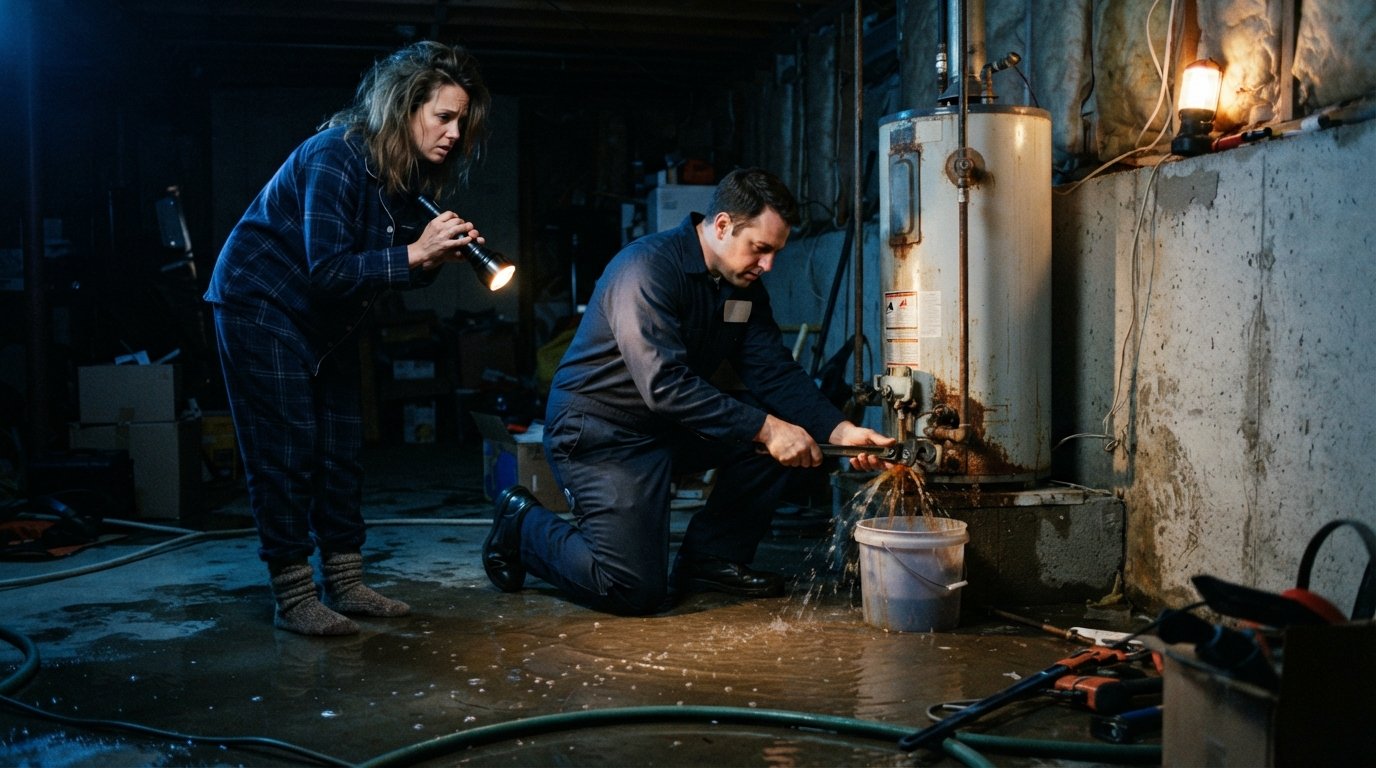
Fast Cash for HVAC or Plumbing Emergencies
Need fast cash for an HVAC or plumbing emergency? Call (833)-501-3363 to explore short-term loan options that fund as soon as the next business day.

By Owen Mitchell
A burst pipe at 2 a.m. or a furnace that quits during a January cold snap does not check your bank balance before it fails. When your home's heating, cooling, or plumbing system breaks, the repair bill often lands before your next paycheck does. The good news is that you have more options than you might think, and some of them can put money in your hands in as little as one business day. This guide walks you through how to get fast cash for an HVAC or plumbing emergency without wrecking your monthly budget or falling for a predatory deal.
Why Home Emergencies Never Wait for Payday
Homeowners across the United States deal with this exact scenario every day. A water heater springs a leak and floods a utility closet. An air conditioner compressor burns out in July, leaving a family without cooling for days. A sewer line backs up and makes the house unusable. These are not optional repairs. They are health, safety, and property-preservation issues that demand immediate attention.
Traditional banks and credit unions usually cannot process a personal loan quickly enough to help. Mortgage lenders certainly will not cut a check for a broken furnace. Credit cards might work, but a maxed-out card or a low limit can leave you short. That gap between what you need and what you can access quickly is exactly where short-term funding options become valuable.
The first step is to understand the true urgency of your situation. Some repairs can wait a few days; others cannot. A slow drain can be scheduled. A sewage backup cannot. A cracked heat exchanger in a gas furnace is a carbon monoxide risk and must be addressed immediately. Knowing which category your repair falls into helps you decide how fast you truly need the cash.
Estimating Your Repair Cost Before You Borrow
One of the most common mistakes homeowners make in an emergency is borrowing more than they need. Panic leads to accepting the first loan offer that appears, even if the amount is larger than the actual repair cost. A better approach is to get a realistic estimate before you apply for any funding.
Ask the contractor for a written estimate that breaks down parts, labor, and any permits or disposal fees. If the repair requires a specialist, such as a licensed electrician or a gas line technician, make sure those costs are included. For HVAC replacements, ask whether the quote includes a new thermostat, ductwork inspection, or refrigerant lines. For plumbing, clarify whether the price covers drywall repair or only the pipe itself.
Here is a quick framework for estimating common emergency repairs:
- Burst pipe repair: $500 to $2,500 depending on location and water damage.
- Water heater replacement: $800 to $2,500 for a standard tank unit, more for tankless.
- Furnace repair: $300 to $1,500 for common fixes; $3,000 to $7,000 for full replacement.
- Air conditioning repair: $200 to $1,500 for repairs; $4,000 to $8,000 for a new system.
- Sewer line clearing or repair: $300 to $5,000 depending on the method and damage.
Once you have a written estimate, you know exactly how much to borrow. That number becomes your target. If a lender offers more than you need, you are not obligated to accept it. Borrowing only what the repair requires keeps your repayment manageable and reduces the total interest you will pay.
Funding Routes for an HVAC or Plumbing Emergency
There is no single right way to pay for an emergency repair. The best option depends on your savings, your credit profile, and how quickly the contractor needs payment. Most homeowners combine two or more of the following approaches.
Emergency Savings and Home Equity
If you have an emergency fund, this is the simplest route. Using cash avoids interest, fees, and credit inquiries. Even a partial payment from savings reduces the amount you need to borrow. If you own your home and have equity, a home equity line of credit (HELOC) can be a lower-interest option, but approval and funding usually take longer than a short-term loan. A HELOC is better suited for planned renovations than for a 3 a.m. pipe burst.
Contractor Payment Plans
Many HVAC and plumbing companies offer in-house financing or payment plans through third-party partners. These plans can be convenient, but the terms vary widely. Some offer 0 percent interest for 12 months; others carry APRs above 20 percent. Before you agree to a contractor's financing, ask for the full terms in writing and compare them to what you could get on your own. A contractor's payment plan is not automatically the cheapest option.
Short-Term Loans and Online Lending Platforms
When you need cash fast and savings are not enough, an online lending platform can connect you with a network of third-party lenders who offer short-term loans, including payday loans, installment loans, and personal loans. These are designed for exactly this kind of situation: an unexpected expense that cannot wait for a traditional bank approval cycle.
Platforms like ExpressCash work by matching your loan request with lenders who may be able to fund as soon as the next business day. You submit one online form, review offers, and choose the one that fits. This is not a direct loan from the platform; it is a connection service. The lender sets the terms, including the APR and repayment schedule.
If you live in a major metro area, you may also find localized funding options. For example, homeowners in Southern California can explore funded loans in Los Angeles, California that are tailored to fast cash needs. The key is to compare offers and choose the one with the lowest total cost for the amount you actually need.
Before you apply, gather the information most lenders require: your name, address, date of birth, phone number, banking details, Social Security number, and proof of income. Having these ready speeds up the process. Most online request forms take under five minutes to complete.
Questions to Ask a Contractor Before Work Begins
An emergency is not the time to skip due diligence. A few pointed questions can protect you from overpaying, uncover financing options you did not know about, and clarify the scope of work. Ask these questions before you sign anything or hand over a deposit.
- Is this a repair or a replacement? Sometimes a repair is possible but a contractor pushes for a full replacement. Get a second opinion if the price difference is large and you have time.
- What is the total out-the-door cost? Ask for parts, labor, permits, taxes, and disposal fees. A low quote that balloons with add-ons is a red flag.
- Do you offer financing? If yes, ask for the APR, term length, and any deferred-interest traps. Compare it to your own funding options.
- How soon can you start and finish? A contractor who cannot give you a timeline may leave you without heat or water for longer than necessary.
- Are you licensed and insured? Verify the license number with your state board. An unlicensed contractor can create bigger problems down the road.
If a contractor pressures you to finance through their preferred lender without letting you compare, that is a warning sign. You are never obligated to use a specific lender. Take the written estimate, step away for 10 minutes, and run your own numbers. The right funding choice is the one that costs you the least over the life of the loan.
Repaying a Repair Loan Without Derailing Your Budget
Once the repair is done and the loan is funded, the real work begins: repayment. Short-term loans carry higher APRs than mortgages or auto loans, so they require discipline. The goal is to pay the loan off as quickly as possible without missing other obligations.
Start by building the repayment into your monthly budget before you spend on anything discretionary. If the loan term is 14 days and your payday is 10 days away, you need a plan for those four days. Some lenders offer rollover or extension options, but these often add fees and increase the total cost. Avoid them if you can.
Consider these strategies to stay on track:
- Set a calendar reminder for the payment date and the day before.
- Automate the payment if your lender allows it, so you never miss a due date.
- Pay extra when possible. Even $20 extra reduces the principal and shortens the term.
- Communicate early if you see a problem. Lenders may offer hardship options, but only if you ask before the payment is late.
- Do not take a second loan to pay the first. That is how a temporary gap becomes a long-term debt cycle.
If your credit score took a hit from the application or if you already had bad credit, focus on on-time payments. Every payment reported to the credit bureaus helps rebuild your profile. Missed payments do the opposite, often triggering late fees and higher interest rates.
Finally, use this experience to strengthen your emergency fund for next time. Even setting aside $20 per week can build a cushion that covers a minor repair without borrowing. The goal is not to avoid loans forever; it is to have more choices when the next emergency hits.
Act Quickly, Borrow Wisely
An HVAC or plumbing emergency is stressful, but it does not have to be financially devastating. By estimating the repair cost, comparing funding routes, asking contractors the right questions, and repaying your loan on time, you can handle the crisis without derailing your budget. Start with a written estimate, explore your options, and choose the path that gets your home back to normal at the lowest total cost.