Cash Loan vs Payday Loan: Understanding Your Short-Term Options
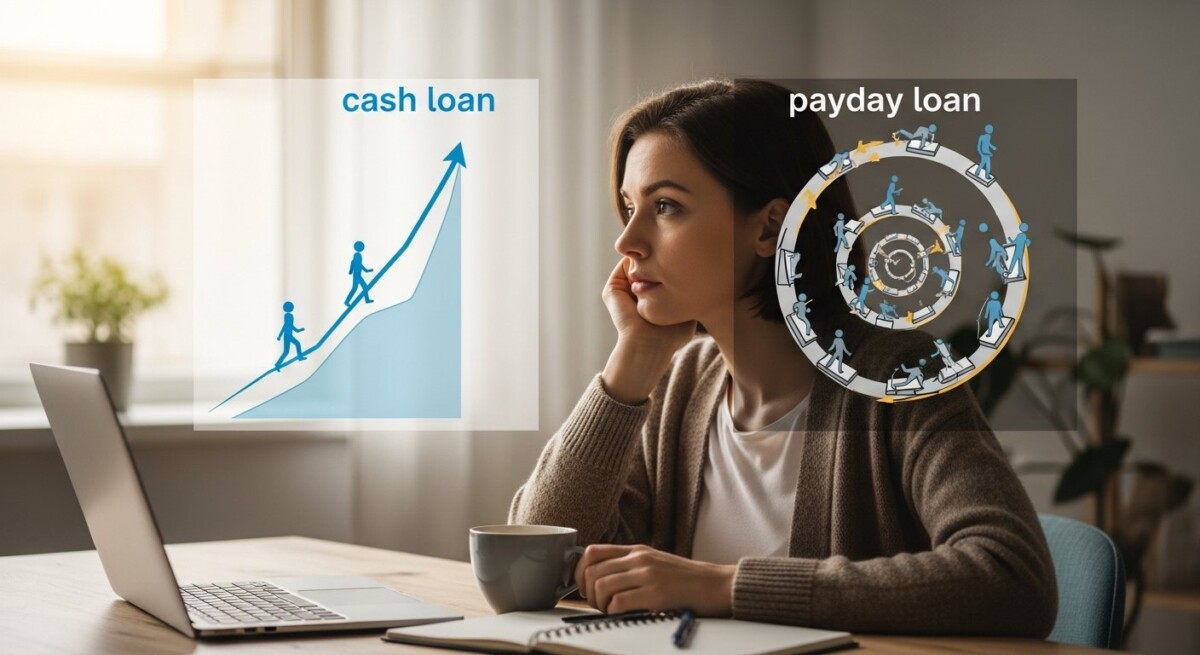

When an unexpected expense hits and your budget is tight, the world of short-term lending can seem like a confusing maze. Two terms you will frequently encounter are “cash loan” and “payday loan,” often used interchangeably but with critical distinctions that can impact your financial health. Choosing the wrong option can lead to a cycle of debt that is difficult to escape. This guide will demystify these financial products, comparing their structures, costs, and ideal use cases so you can make an informed decision that aligns with your immediate needs and long-term stability.
Visit Compare Loan Options to explore your responsible short-term lending options and make an informed financial decision.
Defining the Key Financial Products
At first glance, cash loans and payday loans appear similar: they both provide quick access to funds, often with minimal credit checks, for those in a financial pinch. However, their legal definitions, typical terms, and structures differ significantly. A “cash loan” is a broad, generic term that can refer to any loan disbursed in physical cash or its immediate digital equivalent. This umbrella can cover personal installment loans, certain lines of credit, or even secured loans from pawn shops. In contrast, a “payday loan” is a specific, highly regulated type of short-term loan. It is designed to be repaid in a single lump sum, typically on your next payday, hence the name. The key difference lies in the repayment structure and the associated cost of borrowing.
How Payday Loans Work: Structure and Cost
Payday loans are characterized by their short term and single-payment structure. Here is a typical process: a borrower writes a post-dated check for the loan amount plus a fee, or authorizes an electronic debit from their bank account. In return, they receive cash, usually ranging from $50 to $1,000, depending on state laws. The loan is due in full on their next payday, usually within two to four weeks. The cost is not expressed as a traditional annual percentage rate (APR) in marketing, but when calculated, it becomes starkly clear. A common fee is $15 per $100 borrowed. On a two-week loan, that translates to an APR of nearly 400%. If the borrower cannot repay on the due date, they may be offered a “rollover,” which involves paying another fee to extend the due date, sinking them deeper into debt.
The Cycle of Debt and Regulatory Scrutiny
This structure is why payday loans are notorious for creating a debt trap. Borrowers who use them for chronic budget shortfalls often find themselves taking out a new loan to repay the old one, a dangerous and expensive cycle. Due to these risks, payday loans are heavily regulated or outright banned in many states. Regulations often cap fees, limit rollovers, and require lenders to verify a borrower’s ability to repay. Understanding these mechanics is crucial before considering such a product.
How Broader Cash Loans Work: Installment and Alternatives
When people refer to a “cash loan” outside the payday context, they are often describing a personal installment loan. These loans provide a lump sum of cash that is repaid over a set period through scheduled, equal payments (installments). Terms can range from a few months to several years. Interest rates vary widely based on the lender, the loan amount, the term, and most importantly, the borrower’s creditworthiness. While some lenders cater to those with bad credit, offering rates higher than traditional banks but lower than payday lenders, others may offer competitive rates to prime borrowers. This category also includes secured cash loans, like title loans (using a vehicle as collateral), which carry the severe risk of asset loss.
Key features of installment cash loans include:
- Structured Repayment: Fixed monthly payments make budgeting easier.
- Longer Terms: Repayment periods from 6 months to 5+ years reduce payment size.
- Credit Impact: Consistent on-time payments can help build credit history.
- Variable Costs: APR can range from 6% to 36% or higher for subprime borrowers.
For a deeper analysis of the advantages and drawbacks of these products, our guide on cash loan pros and cons provides a balanced financial perspective. The flexibility of an installment loan often makes it a more manageable, though not always cheaper in total interest, alternative to a lump-sum payday repayment.
Direct Comparison: Key Differences at a Glance
To make an informed choice, you must directly compare the attributes of a typical payday loan with a typical personal installment cash loan. The divergence in their design leads to vastly different financial outcomes for the borrower. The most critical differentiators are the repayment schedule and the total finance charge. A payday loan’s balloon payment is its defining and most risky feature, while an installment loan amortizes the cost over time. Furthermore, while both may perform a credit check, payday lenders are primarily concerned with proof of income and an active checking account, whereas installment lenders weigh credit history more heavily in determining the interest rate.
Visit Compare Loan Options to explore your responsible short-term lending options and make an informed financial decision.
Making the Right Choice for Your Situation
Choosing between these options depends entirely on your specific circumstances, the amount needed, and your confidence in repaying. A payday loan might, in theory, be a last-resort option for a one-time, urgent expense if you are 100% certain you can repay the full amount plus fee on your next payday without compromising essential expenses. However, the statistical reality shows most borrowers cannot, leading to renewal and rollover. An installment cash loan is generally a safer choice for a larger, planned expense or a financial emergency that requires more than two weeks to solve. The predictable payments integrate into a monthly budget. For any short-term loan, always calculate the total repayment amount (principal plus all fees and interest) and ensure it fits your budget.
Before committing to any high-cost loan, exhaust all other avenues:
- Negotiate a payment plan directly with your bill provider.
- Explore a small-dollar loan from a credit union, many of which offer Payday Alternative Loans (PALs) with capped rates.
- Consider a cash advance from a credit card (while costly, it is often cheaper than a payday loan).
- Ask family or friends for a short-term loan with a clear, written agreement.
- Look into local community assistance programs for help with rent, utilities, or food.
Frequently Asked Questions
Which is easier to get, a cash loan or a payday loan?
Payday loans are often easier to obtain quickly with very bad credit or no credit, as they primarily require proof of income and a bank account. Many installment cash lenders will perform a harder credit check, which may be a barrier for some.
Can I get a cash loan with bad credit?
Yes, many lenders specialize in personal installment loans for borrowers with poor credit. However, expect significantly higher interest rates compared to offers for those with good credit. Always compare multiple offers.
What happens if I cannot repay a payday loan?
If you cannot repay, the lender may encourage you to roll over the loan for another fee. They may also deposit your post-dated check or initiate an electronic withdrawal, potentially causing overdraft fees. The debt may be sent to collections, damaging your credit score.
Are online lenders for these loans safe?
Many are legitimate, but caution is essential. Verify the lender is licensed in your state and read all terms and conditions. Avoid any lender that asks for upfront fees before disbursing a loan, a common red flag for scams.
Do these loans help build credit?
Installment loans typically report to credit bureaus. Consistent on-time payments can help build a positive credit history. Most payday lenders do not report to the major credit bureaus unless the loan goes into collections, meaning they usually only impact your credit negatively.
Navigating the landscape of short-term lending requires a clear-eyed view of costs and risks. While both cash loans and payday loans offer speed, their long-term financial implications are worlds apart. By prioritizing loans with transparent terms, manageable repayment schedules, and the lowest possible APR, you can address your immediate cash flow need without jeopardizing your future financial stability. The most powerful tool is knowledge, enabling you to use these products as a controlled financial tool rather than falling victim to a debt cycle.
Visit Compare Loan Options to explore your responsible short-term lending options and make an informed financial decision.


About Lucas Ramirez
Related Posts